
I still remember standing on platform 3 at Zurich Hauptbahnhof during my very first trip to the Alps. I was staring at a massive, yellow paper timetable pinned to a bulletin board, trying to cross-reference my destination with a web of tiny numbers, panic slowly setting in as the clock ticked down.
When I finally walked up to a machine to buy a standard ticket, the screen flashed 70 CHF for a simple, one-way, two-hour ride. I actually hit the red “cancel” button because I thought I had made a mistake. I hadn’t. That was just the standard price.
When you start researching how to move across the Alps, the sheer cost and complexity can feel physically painful. You look at your travel budget, you calculate the cost of a single cable car, and your stomach drops a little. It is notoriously, unapologetically expensive.
But here is the thing. You can ride the panoramic glass-domed trains, cross the turquoise lakes on vintage steamboats, and climb to 10,000-foot glaciers without completely bankrupting your trip. What I learned after navigating these cantons is that the Swiss transit system actually rewards smart, upfront planning. If you understand how their grid connects, when to use the SBB app, and how to avoid paying full price, those terrifying transit costs drop dramatically.
Honestly, mastering this network isn’t about finding a secret discount code. It is about understanding the mechanics of the system. Whether you are dragging a family of four across the country, traveling light as a digital nomad, or just trying to pull off your first international solo trip, you need a proven blueprint.
Welcome to the ultimate Switzerland Train Travel Guide 2026. No fluff. No confusing transit jargon. Just the practical logistics, real cost breakdowns, and step-by-step strategies you need to navigate the Alps efficiently. Let’s get into the logistics.
Why Swiss Trains Are Actually Worth the Hype
You have probably heard that Swiss trains are punctual. That is an understatement. They operate with a clinical, almost obsessive precision. If the board says 08:04 AM, the doors close at 08:03 and 50 seconds.
But I didn’t expect this: the real magic isn’t the punctuality. It is the integration.
In Switzerland, the train schedule dictates the bus schedule, which dictates the boat schedule. If your train arrives in Spiez at 10:14 AM, the boat to Interlaken is waiting at the dock, and it departs at 10:20 AM. You never find yourself stranded in a concrete lot waiting an hour for a connection. It is a masterpiece of frictionless travel. It removes the baseline anxiety from your trip because the infrastructure actively works to get you where you need to be.
If you value logistics that actually work, this place spoils you. You spend less time figuring out how to get somewhere, and more time actually being there.
How the Network Actually Works (The SBB System)
Before you buy a single ticket, you need to know who runs the show. The country is blanketed by different transit companies, but they all talk to each other.
1. The SBB (Schweizerische Bundesbahnen) This is the federal railway company. They are the backbone of this Switzerland Train Travel Guide 2026. They operate the sleek, double-decker InterCity (IC) trains connecting the major hubs—Zurich, Bern, Basel, Geneva, and Lucerne. They also run the regional trains (IR) that connect smaller towns.
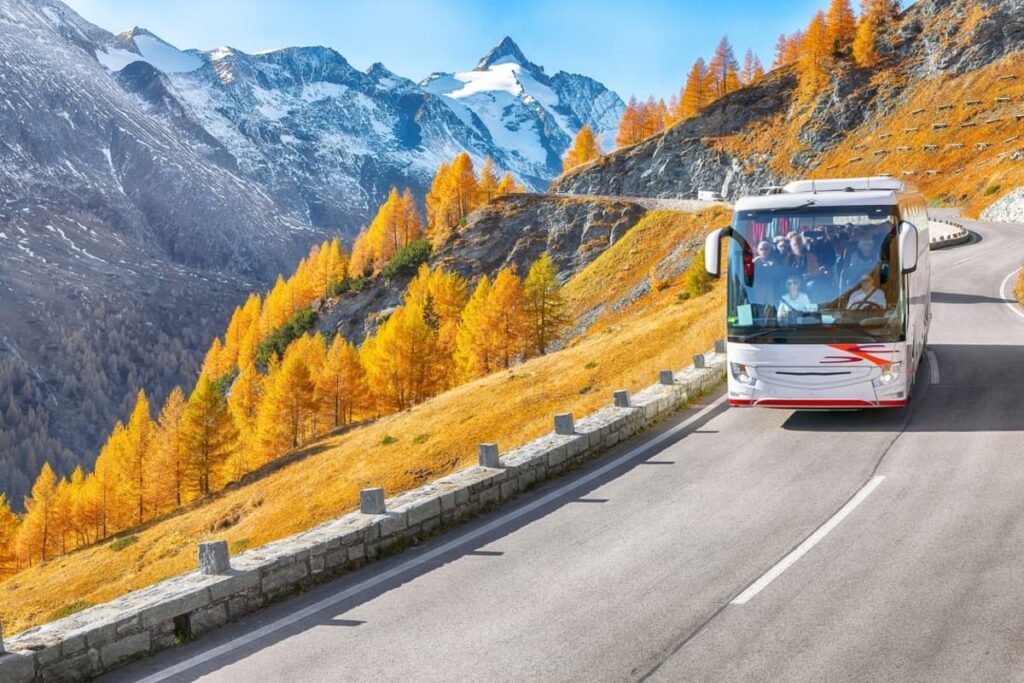
2. The PostAuto (PostBuses) You will see bright yellow buses with a distinct three-tone horn navigating the winding, terrifyingly narrow mountain roads where trains cannot physically go. They are part of the national network. If you want to get to a remote hiking trailhead, the PostBus is your lifeline.
3. The Lake Navigation Companies’ ferries and vintage paddle steamers operate on Lake Geneva, Lake Lucerne, Lake Thun, and Lake Brienz. These are not just tourist cruises; they are official public transit routes.
4. The Private Mountain Railways This is where tourists get confused. Once you get high into the Alps—like the trains climbing up to Zermatt’s Gornergrat or the cable cars in the Jungfrau region—the federal tracks end. Private companies operate these high-altitude routes.
- The Budget Reality: Standard SBB tickets and national travel passes usually fully cover the first three categories. They rarely cover the private mountain railways 100%. Instead, you will usually get a 50% discount.
Ticket Types & The Budget Reality
Let’s just rip the band-aid off. If you walk up to a ticket machine on the day of travel and buy a standard point-to-point ticket, you will bleed money.
To travel smart, you have to change your buying habits. Here are the exact ticket types you need to know for 2026.
The Standard Point-to-Point Ticket
This is the most expensive way to travel. You buy a ticket from Point A to Point B. It is valid for any train on that route for that entire calendar day. You have total flexibility, but you pay a massive premium for it. Never buy these unless you absolutely have to.
Supersaver Tickets (For the Hyper-Planners)
If you know exactly what train you want to take on a specific day and time, this is your budget hack. You can buy a “Supersaver” ticket on the SBB app up to 60 days in advance. You can routinely save up to 50% off the standard fare.
- The Catch: You are locked into that exact train departure time. If you buy a ticket for the 10:04 AM train and you show up at 10:15 AM, your ticket is garbage. You have to buy a new one.
- Who it’s for: Budget travelers who don’t mind rigid itineraries.
Saver Day Passes (The Hidden Gem)
This is one of the most underutilized tools in any Switzerland Train Travel Guide 2026. The SBB releases a limited number of “Saver Day Passes” up to 6 months in advance. These passes give you unlimited travel on the entire national network (SBB trains, buses, boats) for one entire day.
- The Reality: If you buy them months in advance, you can get a full day of unlimited travel for as little as 52 CHF. If you wait until the day before, they cost 119 CHF.
- Who it’s for: People taking one massive cross-country trip (like Geneva to St. Moritz) on a single day who want flexibility.
The Travel Pass Dilemma
If you are traveling for a week or more, buying individual tickets—even Supersaver ones—becomes mentally exhausting. You need a pass. But choosing between the Half Fare Card and the continuous Swiss Travel Pass is the biggest mathematical hurdle of your trip. We wrote an entire, massive breakdown on finding the best Swiss Travel Pass, but here is the short version: if you are moving to a new city every day, buy the continuous pass. If you are staying in one basecamp for a week and just taking local cable cars, buy the Half Fare Card.
Scenic Routes vs. Commuter Routes
There is a massive difference between getting somewhere fast and getting somewhere beautifully. When building your itinerary, you have to actively choose the views.
The Fast Route (The Commuter Reality) If you check the SBB app for a route from Zurich to Milan or Lugano, it will likely route you through the Gotthard Base Tunnel. It is an engineering marvel and the longest railway tunnel in the world. It is fast, highly efficient, and you will stare at a dark concrete wall for 20 solid minutes.
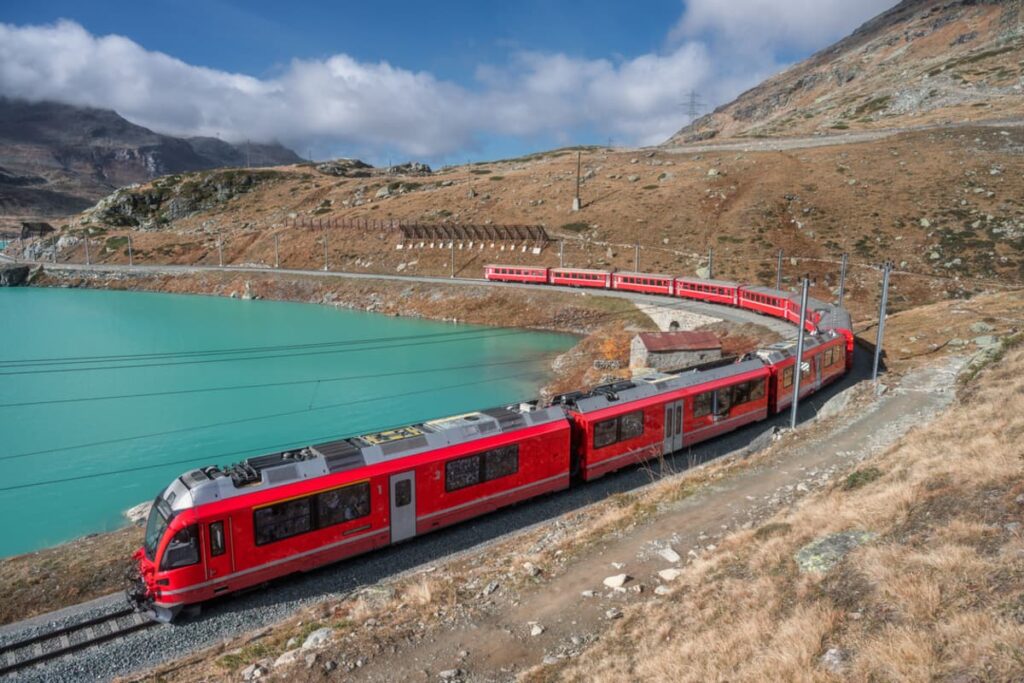
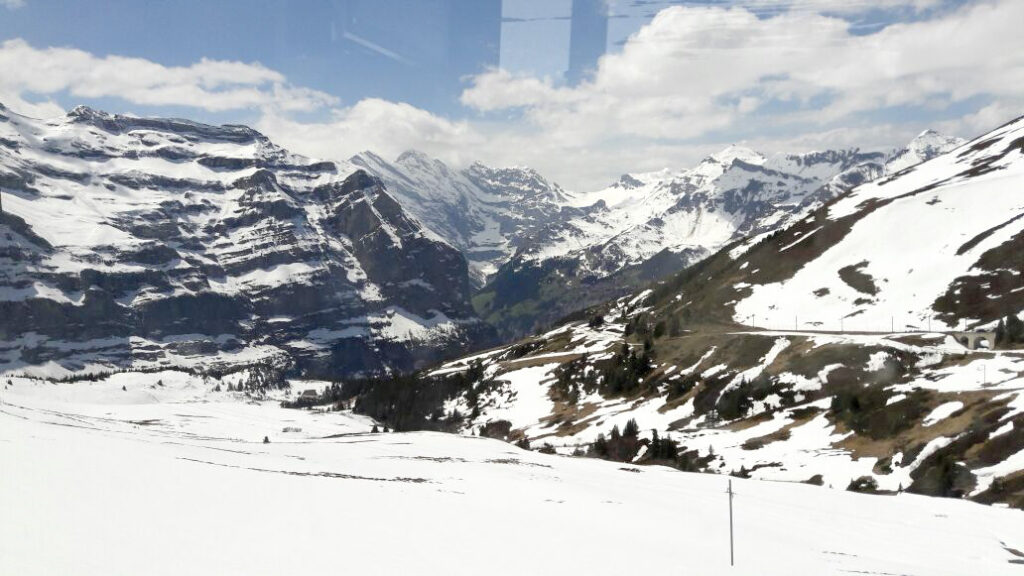
The Scenic Route (The Panoramic Experience) If you want the views, you have to seek out the famous scenic lines. These are the trains with the massive, curved glass windows that stretch into the ceiling.
- The Glacier Express: Marketed as the “slowest express train in the world,” it connects Zermatt to St. Moritz. It takes 8 hours. It is staggeringly beautiful, but it requires a very expensive, mandatory seat reservation (around 49 CHF just for the seat, on top of the ticket).
- The Hack: You can take standard regional trains on the exact same tracks for a fraction of the cost. You won’t get the curved windows or the white-tablecloth lunch, but the mountains outside are exactly the same.
- The Bernina Express: This is arguably the most spectacular train ride in Europe. It crosses the Alps from Chur down into Tirano, Italy, passing glaciers and crossing the famous circular Brusio viaduct.
- The GoldenPass Express: This line connects Montreux (on Lake Geneva) to Interlaken. It is the perfect scenic route to build into a standard 7-day itinerary because it naturally connects two major tourist hubs without requiring a massive detour.
The Family Travel Reality
Traveling with kids on trains in other parts of Europe usually involves wrestling strollers down narrow aisles and praying they don’t scream in the quiet car.
Switzerland handles this brilliantly. It is the most family-friendly transit network on the planet.
The Ticki Park Family Carriages Almost all double-decker SBB InterCity (IC) trains feature a dedicated “Ticki Park” family carriage, usually located on the upper deck at the very end of the train. It is a literal jungle gym with a slide, climbing areas, and board games printed onto the tables. The kids burn off energy, and you actually get to sit and watch the Alps roll by.
The Swiss Family Card This is the greatest budget hack for families. If you buy any adult Swiss Travel Pass or a Half Fare Card, you can request a Swiss Family Card for free.
- What it does: It allows any child from their 6th birthday up until their 16th birthday to travel completely free when accompanied by a parent. They don’t get a discount; they ride for zero francs. If you are taking two 12-year-olds up a 100 CHF cable car, this card literally saves you hundreds of dollars in a single afternoon. (Note: Kids under 6 always travel free).
Digital Nomad Logistics (WiFi, Work Spaces, and Luggage)
If you are nomading through Europe and need to grind out some work while moving between cantons, the trains are your mobile office. But there are rules.
The WiFi Reality Check Surprisingly, SBB does not offer free WiFi on domestic trains. They tried it years ago, but found the alpine tunnels made satellite connections too spotty, and outfitting the trains was too expensive.
- The Solution: There is free WiFi at every major train station. Once on the moving train, you will need to rely on your mobile data.
If your home carrier charges heavy roaming fees, buy local data through eSIMs before you arrive. The 5G network in Switzerland is so strong that I have flawlessly taken Zoom calls while passing grazing cows at 80 miles an hour.
The Quiet Zones and Business Zones If you are in First Class, look for the “Business Zone” carriages. They have larger tables, individual power outlets, and are designed for working. If you are in Second Class, look for the carriages marked with a “silence” icon (a face with a finger over the lips). These are strict quiet zones. Do not take a phone call here. Do not play music. The locals will aggressively shush you.
What Do I Do With My Heavy Luggage? This is a massive point of anxiety for first-time visitors. There are no baggage cars where you check your luggage. You carry it on with you.
- There are spacious luggage racks at the ends of every carriage for massive suitcases.
- There are V-shaped spaces between back-to-back seats where you can slide medium suitcases securely.
- It is extremely safe. Property crime is incredibly low; no one is stealing your Samsonite bag on a Swiss train.
The Luggage Forwarding Hack If you are moving from Zurich to Zermatt and want to stop in Bern for the day, dragging bags is miserable. SBB offers a brilliant luggage forwarding service. For about 12 CHF per bag, you drop your luggage at the Zurich station in the morning, and SBB physically transports it to your hotel in Zermatt by that evening. You travel all day with just a backpack.
Navigating the Train Stations (Like a Local)
Swiss train stations (called Bahnhof or Hauptbahnhof/HB) are basically pristine underground shopping malls that happen to have trains attached to them.
Zurich HB This is the largest station in the country. It has multiple underground levels.
- Tip: Tracks 3 through 18 are above ground. Tracks 31 to 44 are underground. Always check the SBB app to see what track your train arrives on, because running from Track 4 above ground to Track 42 underground takes at least 7 minutes.
Interlaken Ost vs. Interlaken West If you are heading to the Jungfrau region, you will pass through Interlaken. It has two stations.
- Interlaken West: The first stop, closer to the main shopping street.
- Interlaken Ost (East): The main hub. If you are transferring to a train heading up into the mountains (Lauterbrunnen or Grindelwald), you must get off at Interlaken Ost.
Food and Bathrooms Do not buy food on the train from the dining car unless you want to pay 9 CHF for a lukewarm coffee. Every major station has a “Migros” or “Coop” supermarket inside. Grab fresh lye pretzels, local cheese, and pastries before you board.
- Warning: The public bathrooms inside the train stations cost 1.50 CHF to 2.00 CHF to use, and they only take coins or contactless cards. The bathrooms on the trains are completely free. Hold it if you can.
A Step-by-Step Guide to Using the SBB App
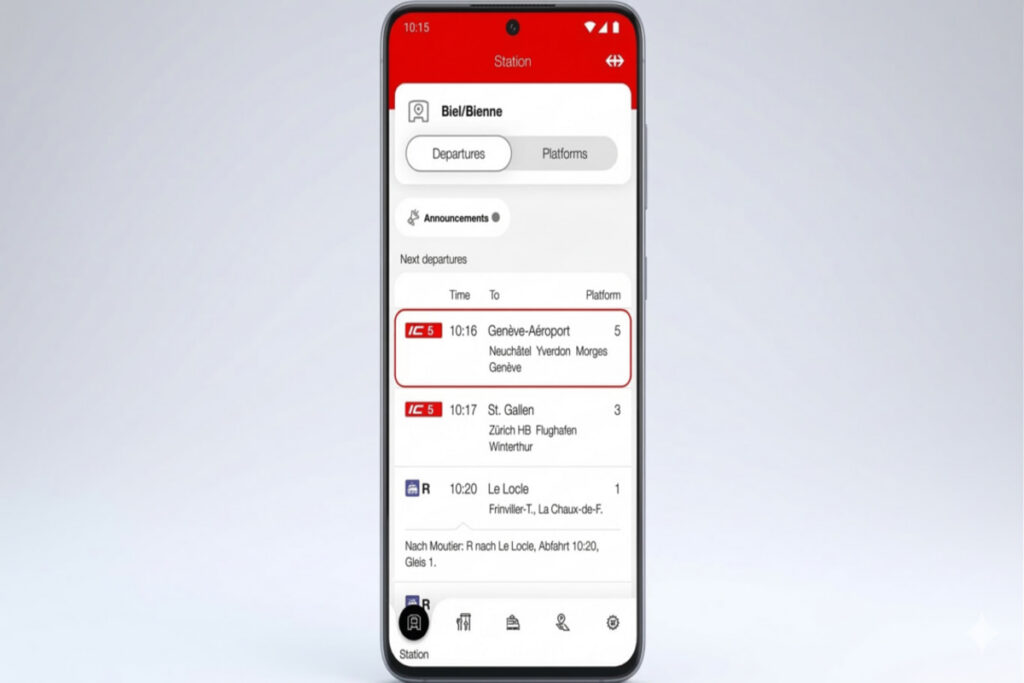
If you take nothing else from this Switzerland Train Travel Guide 2026, take this: download the SBB Mobile App before your plane takes off. It is the smartest travel tool you will use. Do not try to use Google Maps for Swiss transit; it lacks real-time platform changes.
Here is how to use it like a pro:
- Enter Your Route: Type “Zurich HB” to “Lucerne”.
- Check the Platform: The app shows the exact track (e.g., “Pl. 6”). It will also update in real-time and turn red if the platform changes.
- Read the Occupancy Icons: Look for the little human figure icons next to the train time.
- One red figure: The train is empty.
- Two red figures: It’s getting full.
- Three red figures: Standing room only. (This is a great cue to wait 20 minutes for the next one).
- Add Your Discount: If you bought a Half Fare Card, go to your profile in the app and add it. The app will then automatically display all tickets at the 50% discounted price.
The 2026 Price Reality Check
Because readers trust specifics more than vague inspiration, let’s look at the actual math. In 2026, standard fares saw minor adjustments. Here are realistic examples of standard, one-way, 2nd class point-to-point tickets (bought on the day of travel, without any discount cards):
- Zurich Airport to Zurich HB (City Center): ~7.00 CHF (10 minutes)
- Zurich HB to Lucerne: ~30.00 CHF (50 minutes)
- Lucerne to Interlaken Ost: ~34.00 CHF (2 hours)
- Interlaken Ost to Lauterbrunnen: ~8.00 CHF (20 minutes)
- Geneva to Zermatt: ~100.00 CHF (3.5 hours)
When you look at a 100 CHF fare for a 3-hour ride, it becomes incredibly obvious why buying a Swiss Travel Pass or a Half Fare Card is an absolute necessity for budget travelers.
Mistakes Tourists Make on Swiss Trains
I watch people make these exact same errors every time I am sitting at a station observing the crowds. Avoid these to travel smoothly:
1. Sitting in First Class by Accident Swiss trains have a bright yellow stripe painted on the outside of the First Class carriages, and a large number “1” painted by the doors. If you have a standard second-class ticket (which is what 95% of people should buy) and you sit in first class because it looked empty, the conductor will not be amused. You will pay a hefty on-the-spot fine, usually starting around 90 CHF.
2. Waiting for the Doors to Open When the train stops at a platform, the doors do not slide open automatically. You have to push the glowing green button located on the center of the door to let yourself in or out. I have seen tourists literally miss their stop because they stood patiently at the glass door waiting for it to open, only for the train to roll away.
3. Buying Zone Tickets Blindly In major cities like Zurich and Geneva, local transit operates on “Zones.” If you buy a ticket for Zone 110 (Zurich city), it is valid for any tram, bus, or train within that zone for a specific time limit (usually 1-2 hours). You don’t buy a ticket for a specific tram line; you buy access to the zone.
4. Not Trusting the Connection Times If the SBB app says your first train arrives in Bern at 14:02, and your connecting train leaves Bern at 14:06, you will panic. A 4-minute connection in Germany or Italy is impossible. In Switzerland, it is perfectly normal. The trains are timed so that your connection is usually waiting directly across the same platform. Trust the app. If it gives you the connection, it is physically possible to make it.
FAQs
Do I need to reserve a seat on Swiss trains?
Rarely. For standard domestic IC and IR trains, you just buy a ticket, walk on, and sit wherever there is an open seat. You only need mandatory reservations for the highly marketed panoramic trains like the Glacier Express or Bernina Express.
Can I bring food on the train?
Yes. Eating and drinking on the trains is practically a national pastime. Grab a fresh sandwich and a coffee from the station supermarket and enjoy your lunch while looking at the lake. Just take your trash with you.
Is 1st Class worth the upgrade?
Realistically, no. Second class on a Swiss train is cleaner, quieter, and has more legroom than first class in almost any other country. The only difference is that 1st class has wider seats (three across instead of four) and is slightly less crowded during rush hour. Save your money for experiences.
What happens if I miss my train?
If you bought a standard point-to-point ticket or have a Swiss Travel Pass, nothing happens. Just get on the next one; your ticket is valid all day. If you bought a discounted “Supersaver” ticket, your ticket is void and you have to buy a new one.
Are the trains wheelchair and stroller accessible?
Yes. The newer double-decker IC trains and regional FLIRT trains feature low-floor entrances that are perfectly level with the platform, allowing you to roll a stroller or wheelchair directly on without lifting it.
Final Thoughts
Travel isn’t about ticking destinations off a list or rushing from one photo op to the next. It’s about how a place makes you feel — and whether you’d return.
For me, mastering the Swiss rail system turned what could have been a stressful, logistics-heavy trip into pure, uninterrupted relaxation. Knowing the train will be there exactly when it says it will be removes a massive layer of anxiety from travel. You stop worrying about navigating traffic or finding parking, and you start actually looking out the window.
Planning your trip? Save this guide, download the SBB app right now, and check our budget travel section before you book your tickets. The Alps are waiting, and if you play it smart, the journey across them is half the experience.