
I still remember standing on platform 3 at Zurich Hauptbahnhof on my very first morning in the country. The air was biting, the station was humming with quiet efficiency, and the departure board said my train would arrive at 08:04 AM.
It rolled in at exactly 08:04. Not a minute early. Not a minute late.
That was the exact moment I realized Switzerland operates on a completely different frequency than the rest of the world. The chaos of Italian train strikes or the confusing bus networks of France simply do not exist here. Everything works. But there is a very steep price for that perfection.
Honestly, piecing together 7-day Switzerland itineraries from scratch can feel deeply intimidating. You start researching, you look at the hotel prices in Interlaken, you calculate the cost of a cable car up a single mountain, and your stomach drops a little. It is notoriously, unapologetically expensive.
But here’s the thing. You can see the massive peaks, ride the panoramic trains, and eat your weight in alpine cheese without completely draining your savings. What I learned after navigating these cantons is that the Swiss system actually rewards smart, practical planning. If you understand how their transit grid connects, which mountain passes to buy, and where to buy your lunch, the costs drop dramatically.
Whether you are dragging a family of four across the country, traveling light as a digital nomad, or just trying to pull off your first international solo trip, this guide breaks down exactly how to navigate the Alps efficiently. No fluff. No impossible schedules. Just the practical logistics you need. Let’s get into it.
Why Visit Switzerland? (Beyond the Postcards)
Sure, you’ve seen the viral videos. The rolling green hills that look like a Windows screensaver, the impossibly milky-blue glacier lakes, the wooden chalets draped in red geraniums.
But I didn’t expect this: the real reason to come here isn’t just the scenery. It is the total, liberating lack of travel friction.
You can literally step off a tarmac in Geneva, walk downstairs to a train station, switch to a funicular an hour later, and ride a gondola up to a 10,000-foot glacier without ever needing to rent a car, hail a cab, or show a second ticket. It is a masterpiece of public infrastructure. The entire country is linked by an invisible, perfectly timed web of trains, postbuses, and lake steamers.
It depends on what kind of traveler you are, but if you value logistics that actually work, this place spoils you. You spend less time figuring out how to get somewhere and more time actually being there.
The Best Time to Travel Here (A Month-by-Month Reality Check)
Everyone wants to go to Switzerland in July. I highly recommend you don’t.
Summer brings solid hiking weather, but it also brings crushing crowds to the main viewpoints and peak pricing for everything with a mattress. To travel smart, you have to understand the microseasons of the Alps.
The “Mud Season” (April to May)
Honestly, skip it if you can. Locals call this the dead zone. The snow is melting in the mountains, so you can’t ski, but the high-altitude hiking trails are just fields of slop. More importantly, a lot of the major cable cars and funiculars shut down entirely for annual maintenance during these months. You pay high prices for half the access.
The Peak Summer (June to August)
This is when the postcard version of Switzerland comes alive. The lakes are warm enough for a quick, freezing dip, and every hiking trail is open. But the heat in the cities (Zurich and Geneva) can be intense, and you will be shoulder-to-shoulder with tour groups on the popular mountain trains. If you must go in summer, book your accommodation six months in advance.
The Golden Window (Mid-September to October)
Realistically, this is the absolute sweet spot for 7-day Switzerland itineraries. The summer crowds have vanished, but the cable cars are still running. The air is incredibly crisp, visibility from the peaks is often better than in July, and the valleys turn this incredible shade of gold. And. The hotel rates finally dip back to reality.
The Winter Magic (December to February)
If you are coming for the Christmas markets or world-class skiing, this is your window. Towns like Zermatt and St. Moritz turn into winter wonderlands. But be prepared: the days are very short (it gets dark around 4:30 PM), and the prices in ski resort towns reach their absolute highest peak of the year.
Experiences Actually Worth Your Time (And Money)
It’s easy to get greedy and overbook yourself when looking at a map of the Alps. You want to see everything. But rushing through Switzerland is a mistake. Here is what actually lives up to the hype and deserves a slot on your itinerary:
The Panoramic Trains
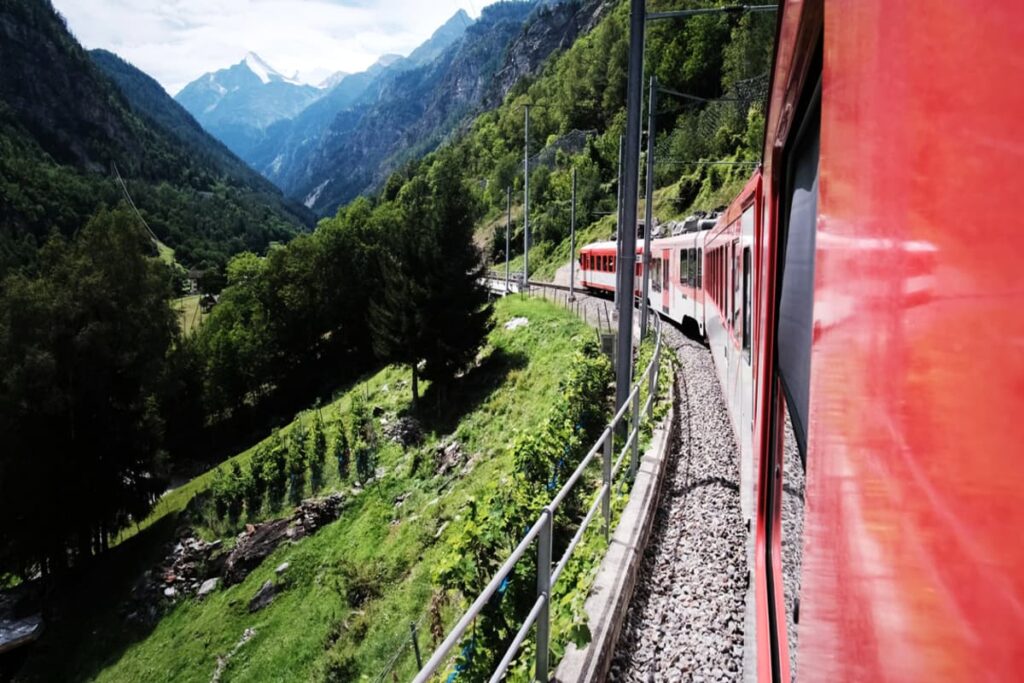
Switzerland is famous for its massive, glass-domed trains. Surprisingly, the heavily marketed Glacier Express isn’t your only option. While it is beautiful, it takes 8 hours and requires an expensive seat reservation.
Instead, look into the Bernina Express or the GoldenPass line. The GoldenPass specifically runs between Lucerne and Montreux, meaning you can naturally build it into your transit days without wasting a whole day just sitting on a train. You get those same massive, curved windows and valley views that make your stomach drop, often with a little less hassle.
The Jungfrau Region Valley Floor
Everyone rushes to the top of the mountains here, but the valley floor is where the real magic is. Lauterbrunnen is a valley trapped between sheer, 1,000-foot cliff faces with 72 different waterfalls pouring down into the green pastures below. Yes, the main street gets busy with day-trippers. But walking the flat, paved path from Lauterbrunnen village to Stechelberg early in the morning, standing at the base of Staubbach Falls with no one else around, is a humbling, quiet experience.
Early Mornings in Lucerne
Walking across the iconic Chapel Bridge at noon is a frustrating maze of elbows, selfie sticks, and tour flags. Doing it at 6:30 AM? You can actually hear the wooden planks creaking over the Reuss River, the air is still cold, and the swans are just waking up on the water. It’s a completely different city before the world wakes up.
The Reality of Budget Travel in Switzerland
Let’s just rip the band-aid off. If you treat Switzerland like Spain or Italy, you will run out of money in three days. A sit-down meal at a totally average, mediocre restaurant will easily cost you 35 CHF. A simple coffee is 6 CHF. It stings.
But budget travel here is possible if you change your habits.
The Supermarket Strategy
If you’re on a tight budget, the local supermarkets are your absolute lifeline. Do not eat at restaurants for lunch. Look for the bright orange “Migros” or “Coop” signs in every single town. These aren’t just grocery stores; they are essentially affordable delis. They have massive bakery sections with fresh loaves of bread, massive blocks of local Gruyère cheese, and pre-made salads. Grabbing a picnic lunch to eat on a bench facing a lake costs maybe 8 to 12 CHF. It is the single biggest money-saving hack in the country.
The Swiss Travel Pass Math
When you start researching 7-Day Switzerland itineraries, paying nearly 400 CHF upfront for a Swiss Travel Pass feels physically painful when you click “buy.
Realistically, though, if your 7-day Switzerland itineraries include moving to a new city every couple of days, taking a few lake steamers, and visiting castles or museums, it pays for itself by day four.
Here is why I love it: there are no turnstiles in Switzerland. You just walk onto the train, sit down, and show your QR code when the conductor walks by. The pass removes the mental fatigue of trying to decipher ticket machines in German or worrying if you bought the right zone fare. Plus, it gives you a 50% discount on the insanely expensive mountain railways (like the trip to Zermatt’s Gornergrat). Do the math for your specific route, but it almost always saves you money in the end.
Official Swiss Federal Railways site for checking real-time train schedules SBB.ch
Realities for Families and Digital Nomads
Different travelers need different logistics. Here is how the country holds up.
For Families
Traveling with kids in Europe is usually a logistical headache of narrow cobblestones and inaccessible train platforms. Here, it’s bizarrely easy. The major train stations are spotless, have wide ramps, and immaculate facilities.
Even better, the SBB intercity trains actually have dedicated “family carriages.” These are usually on the top deck of the double-decker trains and feature a literal playground built into the carriage. The kids can climb around a jungle gym while you sit in a comfortable seat staring out the window at the mountains.
But dining out with a family of four will wreck your daily budget. If you want something central and convenient, booking an apartment with a kitchen is a solid option. It’s not always the cheapest upfront, but the ability to cook your own dinner saves you hundreds of Francs over a week.
For Digital Nomads
Nomading here is a flex, not a budget hack. You don’t come to Switzerland to bootstrap a startup.
If you are just passing through for a week, though, the infrastructure won’t let you down. The 5G is incredibly fast, even when you are rocketing through a dark tunnel under the Alps. Zurich has a brilliant, modern coffee culture, but you are going to pay premium prices for a flat white.
If you need to grind out some work while traveling, base yourself in smaller hubs. Places like Thun, Chur, or even the outskirts of Bern offer much cheaper Airbnb rates than trying to pay Geneva or Zurich rent, but you remain just a 20-minute train ride away from the action.
Where to Stay (The Basecamp Strategy)
A common mistake when building 7-Day Switzerland itineraries is changing hotels every single night, which wastes your precious daylight hours.
- Budget (The Hub): Interlaken. It isn’t the prettiest town in Switzerland, but it is the ultimate transit hub for the mountains. It has a high density of clean, well-run hostels and budget hotels, making it easy to catch early trains to the Lauterbrunnen and Grindelwald valleys.
- Mid-Range (The Sweet Spot): Lucerne. If you want something central, incredibly scenic, and convenient, this is a solid option. It’s not the cheapest, but the location saves you time. You are right on the lake, surrounded by mountains, and only an hour from the Zurich airport.
- Premium (The Splurge): Zermatt. Waking up, opening your hotel balcony door, and staring directly at the jagged peak of the Matterhorn is a memory you won’t forget. If you have the budget to splurge for one or two nights, do it here.
Local Food (And Drink)
Swiss food is incredibly heavy. It was engineered over centuries for farmers surviving brutal, freezing winters in isolated valleys, not for light summer snacking.
The Cheese Reality

You have to do a traditional cheese fondue at least once. The smell of melted gruyère, garlic, and white wine hits you like a wall the second you walk into a traditional Stube (tavern). It is pungent, it is messy, and it is deeply satisfying after a long day of hiking. Just follow the local rule: never drink cold water with fondue (they say it hardens the cheese in your stomach). Drink white wine or hot black tea instead.
Beyond the Fondue
Also, track down Rösti. It is essentially a giant, crispy, butter-soaked hash brown cooked in a skillet, usually topped with a fried egg, bacon, or melted raclette cheese. It is cheap, filling, and incredible.
The Ultimate Budget Hack: Water
Because buying water here is a rookie mistake, let me save you 5 to 10 CHF a day right now: tap water in Switzerland is pure alpine runoff. It is better than the bottled water you buy at home, and it’s free. Bring a reusable bottle and fill it at any of the thousands of beautiful, ornate public fountains found in literally every village square and city street.
The 7-Day Route (The Step-by-Step Blueprint)
While there are dozens of ways to cross the country, these 7-Day Switzerland itineraries are designed for maximum efficiency. It minimizes the time you spend dragging bags between hotels and maximizes your time in the actual mountains.
The official federal weather service—crucial for accurate alpine weather, MeteoSwiss
Day 1: Zurich Arrival & The Old Town
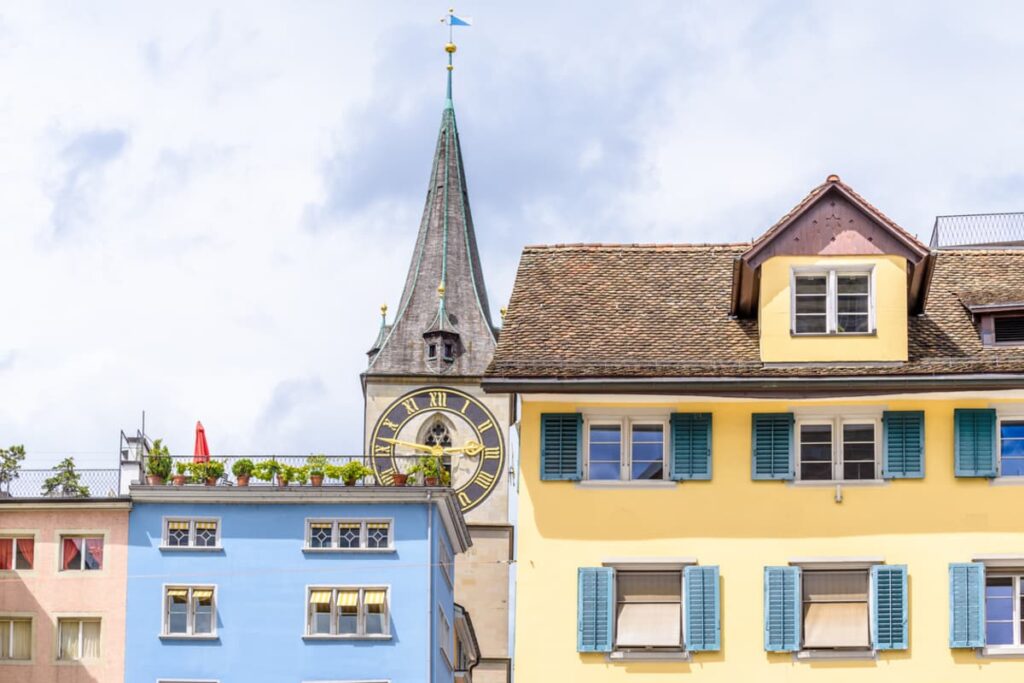
Land at Zurich Airport (ZRH). The airport train station is located directly beneath the terminals. If you bought a Swiss Travel Pass, simply walk onto the next train to Zurich Hauptbahnhof (a 10-minute ride). You can learn more about the Zurich Travel Guide
Check into your hotel, drop your bags, and shake off the jet lag by walking the Old Town (Altstadt). Walk down the famous Bahnhofstrasse, cross the Limmat River, and wander the narrow, winding cobblestone streets up to the Lindenhof. This elevated park offers the best free, panoramic view of the city and the river below.
For dinner, keep it simple. Grab a bratwurst at the famous Sternen Grill near the lake.
Day 2: Lucerne & The Golden Round Trip
Wake up early and take the quick, 50-minute train south to Lucerne.
Drop your bags at your new basecamp. Spend the morning walking the historic city walls (Museggmauer) and crossing the Chapel Bridge.
In the afternoon, execute the “Golden Round Trip” to Mount Pilatus. This is where your Swiss Travel Pass shines. Take a lake steamer boat from Lucerne to Alpnachstad. From there, board the steepest cogwheel railway in the world up to the peak of Mount Pilatus. The views from the top, stretching across half the country and the black forest of Germany, are staggering. Take the panoramic gondolas back down the other side of the mountain to Kriens, and catch a quick bus back to your hotel in Lucerne.
Day 3: Interlaken & The Lauterbrunnen Valley
Check out early and take the Luzern-Interlaken Express. This 2-hour train ride is spectacular, passing crystal-clear lakes and climbing over the Brünig Pass. Sit on the right side of the train for the best views of Lake Brienz as you descend into Interlaken.
Drop your bags in Interlaken (or Grindelwald if you chose a mountain base).
Spend the afternoon exploring the Lauterbrunnen valley. Take the 20-minute train from Interlaken Ost into the valley. Walk the flat path to Trümmelbach Falls—a series of ten glacier-fed waterfalls hidden entirely inside a mountain. The roar of the water echoing in the caves is deafening and incredible.
Day 4: The High Peaks (Jungfraujoch vs. Schilthorn)
Today is your high-altitude mountain day. You have a choice to make, and it depends on your budget.
Option A: Jungfraujoch (The Top of Europe)
This is the famous one. A train tunnels directly through the Eiger mountain to deposit you at a glacier saddle at 11,300 feet. You can walk on the glacier and explore an ice palace. It is spectacular, but it is highly commercialized and very expensive (even with a pass, expect to pay around 150 CHF for the ticket).
Option B: Schilthorn
This is the peak made famous by the James Bond film On Her Majesty’s Secret Service. You take a series of thrilling cable cars up to 9,700 feet. The viewing platform offers arguably a better panoramic view because you are actually looking at the famous Eiger, Mönch, and Jungfrau peaks rather than standing on them. It is slightly cheaper and generally less crowded.
Crucial Tip: Do not buy tickets for either of these until the morning of your trip. Check the live mountain webcams on your hotel TV or phone. If the peaks are trapped in clouds, you will pay 150 CHF to stare at a white wall of fog.
Day 5: Zermatt & The Matterhorn
Leave the Jungfrau region and take the train south, deep into the canton of Valais, to the car-free village of Zermatt. The journey takes about 2.5 hours.
You don’t need cars here; you walk, or you take tiny electric taxis. Spend the afternoon riding the Gornergrat railway. This open-air cog train slowly climbs out of the village up to a rocky ridge at 10,000 feet.
Insider trick: Sit on the right side of the train going up. You will get the absolute best, unobstructed, continuous views of the Matterhorn as the train climbs through the pine forests and breaks above the tree line.
Day 6: Montreux & The French Riviera
Leave the harsh, jagged high peaks and travel west toward Lake Geneva (Lac Léman) to the French-speaking Riviera.
The vibe here completely shifts. The architecture feels Parisian, the climate is milder, and palm trees line the water. Walk the flower-lined, miles-long promenade in Montreux.
In the afternoon, walk or take the bus to Chillon Castle (Château de Chillon). This medieval fortress sits on a rocky island just off the shore of the lake. It is the most visited historic monument in Switzerland, and wandering through the damp, centuries-old dungeons feels like stepping back in time.
Day 7: The Journey Home
Depending on your flight, take a final, scenic train ride back to Geneva or Zurich. The train systems are so reliable that you can confidently take a train from Montreux directly to the Zurich Airport on the morning of your flight without sweating about delays.
Before you walk through security, grab a box of Sprüngli Luxemburgerli (mini macarons) at the station. It’s the perfect, sweet end to the trip.
Travel Cost Breakdown
These are realistic daily estimates per person, assuming mid-range choices, booking a few months in advance, and utilizing a pre-purchased travel pass.
| Expense Category | Daily Cost (CHF) | 7-Day Total (CHF) |
| Accommodation (Mid-range hotel or nice Airbnb) | 120 | 840 |
| Food (Supermarket lunch, modest restaurant dinner) | 60 | 420 |
| Transport (8-Day Swiss Travel Pass) | N/A | 389 (upfront) |
| Cable Cars & Entry Fees (Discounted via pass) | 40 | 280 |
| Total Estimated Cost | — | ~1,929 CHF |
Safety and Security (A Reality Check)
Safety here is almost boring. Violent crime is practically nonexistent. You can walk back to your hotel after a late dinner in Zurich or Lucerne, feeling completely at ease.
But don’t let the postcard scenery make you entirely careless.
The Urban Reality
Pickpockets definitely work the crowds at the Geneva and Zurich main train stations, specifically targeting distracted tourists wrestling with heavy luggage on the escalators. Keep a hand on your bag when you’re boarding a packed intercity train.
The Alpine Reality
More importantly, respect the altitude and the mountains. The weather at 10,000 feet does not care what the forecast said in the valley. It can go from blinding, warm sunshine to a dangerous, freezing white-out blizzard in twenty minutes. Always, always carry a waterproof layer and extra water in your daypack, even in August.
Mistakes Tourists Make
I watch people make these same mistakes every time I’m sitting at a Swiss train station observing the crowds:
Ignoring the SBB Mobile App. Do not try to read the yellow paper schedules pinned to the station boards. Download the SBB Mobile app the moment you land. It is the smartest travel tool on your phone. It shows real-time delays, tells you exactly which platform your train arrives on, and even has little icons indicating how crowded specific train cars are going to be before the train even pulls in.
Buying Point-to-Point Tickets Blindly.
If you walk up to a machine and buy a standard ticket from Zurich to Interlaken, you will pay a fortune. Always look into the Half-Fare Card or the Swiss Travel Pass. The break-even point on these passes is incredibly low if you are traveling for a week.
Planning a Sunday Shopping Spree. Almost everything in the country shuts down on Sundays. It is a legally protected day of rest. If you need groceries for a hike, pharmacy items, or souvenirs, you must buy them on Saturday. Only the small convenience shops inside major train stations stay open. practical 7-day Switzerland itinerary with routes, costs, and travel tips.
Is 7 days enough for Switzerland?
Yes. While you won’t see every single canton or hidden valley, 7 days is the perfect window to hit the cultural hubs (Zurich and Lucerne), the dramatic alpine peaks (Jungfrau region and Zermatt), and a lakeside region (Montreux) without feeling completely exhausted. It gives you a comprehensive taste of the country’s diversity.
Do I actually need cash here?
Hardly ever. I’ve gone on entire 10-day trips without touching a physical Swiss Franc. Cards, Apple Pay, and contactless payments are accepted everywhere, down to the smallest alpine coffee huts serving hikers. It is smart to keep a 50 CHF note tucked in your wallet just in case a machine goes down, but you don’t need to visit an ATM constantly.
Is the Swiss Travel Pass worth it for 7 days?
It depends on your travel style. If you plan to rent an Airbnb in one town and just do local hikes, no. But if your 7-day Switzerland itineraries include moving to a different city every couple of days, taking lake boats, riding buses, and visiting museums, yes. It saves you the mental fatigue of using ticket machines and gives you a 50% discount on the expensive mountain railways.
Can I survive with just English?
Easily. Switzerland has four official national languages (German, French, Italian, and Romansh), but English acts as the unofficial bridge language. In the tourist sectors, train stations, restaurants, and hotels, almost everyone speaks it flawlessly. You will never feel lost due to a language barrier.
Final Thoughts
Travel isn’t about ticking places off a list or rushing from one photo op to the next. It’s about how a place makes you feel — and whether you’d return.
Ultimately, the best 7-Day Switzerland itineraries are the ones that give you enough time to actually sit by a lake and enjoy the view, rather than just rushing to the next train.
For me, Switzerland surprised me in ways I didn’t expect. Beyond the staggering beauty of the Eiger or the Matterhorn, what I remember most is how peaceful travel can actually be when the infrastructure supports you instead of fighting you. Knowing the train will be there exactly when it says it will be removes a layer of anxiety from travel that you didn’t even realize you were carrying.
Planning your trip? Save this guide — and check our budget travel section before booking anything. The Alps are waiting, and if you play it smart, they don’t have to cost a fortune.