
I still remember staring at the glowing screen of an SBB ticket machine in Zurich on my first trip to the Alps, watching the total fare climb to 70 CHF for a simple, one-way train ride. I actually hit the red “cancel” button because I thought I had made a mistake. I hadn’t. That was just the standard price.
When you start researching the best Swiss Travel Pass for your trip, the initial sticker shock can feel physically painful. You see the upfront costs, you look at your travel budget, and your stomach drops a little. It is notoriously, unapologetically expensive to move around this country.
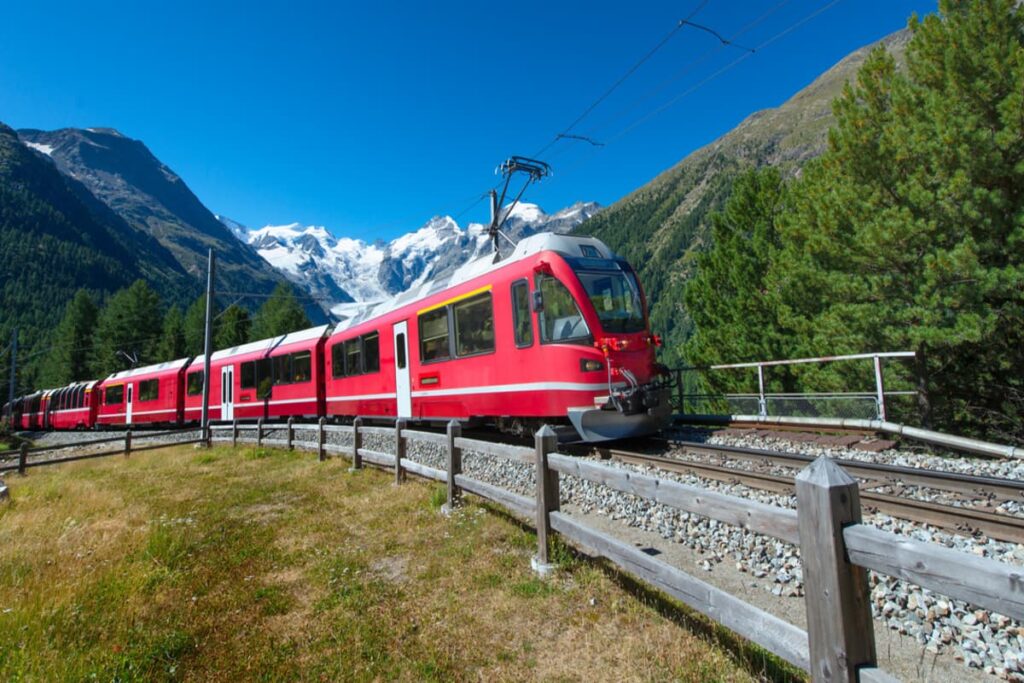
But here is the thing. You can ride the panoramic glass-domed trains, cross the turquoise lakes on vintage steamboats, and climb to 10,000-foot glaciers without completely bankrupting your trip. What I learned after navigating these cantons is that the Swiss transit system actually rewards smart, upfront planning. If you understand the math, the local passes, and the 2026 price structures, those terrifying transit costs drop dramatically.
Honestly, finding the best Swiss Travel Pass isn’t about finding a secret discount code. It is about matching the exact rhythm of your itinerary to the right piece of paper. Whether you are dragging a family of four across the country, traveling light as a digital nomad, or just trying to pull off your first international solo trip, this guide is your reality check.
No fluff. No confusing transit jargon. Just the practical, proven logistics you need to navigate the Alps efficiently in 2026. Let’s break down the math.
Understanding the Swiss Travel System (The Reality)
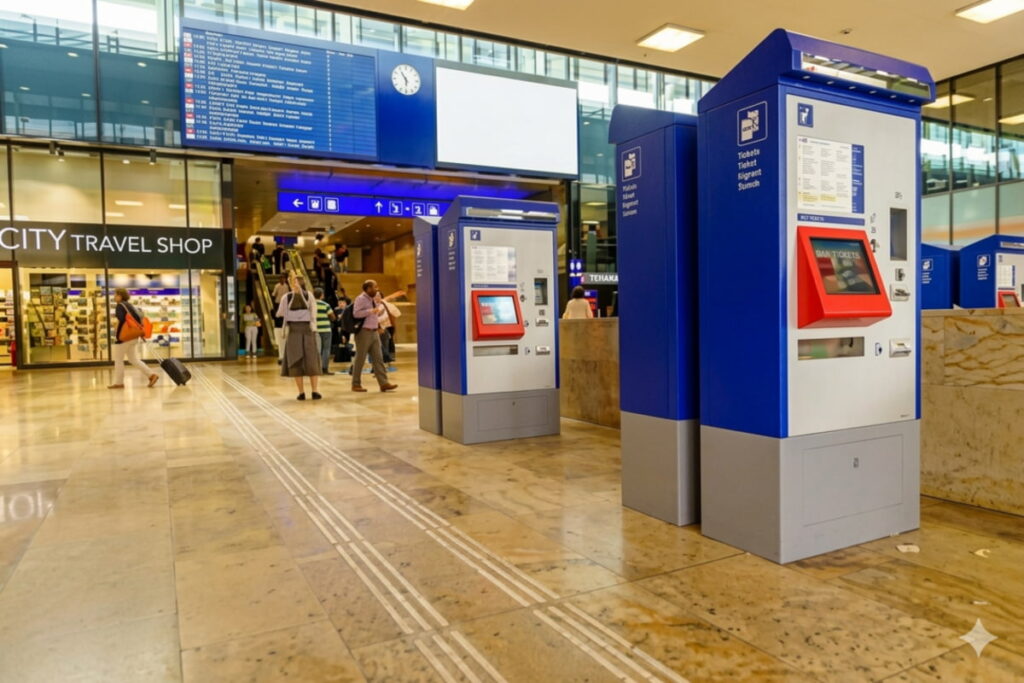
Before we can determine the best Swiss Travel Pass for your specific trip, you have to understand what you are actually buying access to.
I didn’t expect this, but the public transit system here completely ruins you for travel anywhere else in the world. You can step off a tarmac in Geneva, walk downstairs to a pristine train station, switch to a yellow PostBus an hour later, and ride a funicular up a sheer cliff face—all perfectly timed, and all using a single ticket network.
The network is essentially divided into two categories, and understanding this split is the secret to not overpaying.
1. The Core Network (Fully Covered)
This includes the federal SBB intercity trains (the sleek, double-decker trains connecting Zurich, Bern, Geneva, etc.), the bright yellow PostBuses that navigate the winding mountain roads, the trams in the cities, and the passenger ferries on lakes like Thun, Brienz, and Lucerne. If a pass says “100% covered,” this is the network it is talking about.
2. The Private Mountain Railways (Partially Covered)
Once you get high into the Alps—like the trains climbing up to Zermatt’s Gornergrat or the cable cars in the Jungfrau region—the federal tracks end. Private companies operate these high-altitude routes.
Because of this, standard travel passes rarely cover these routes 100%. Instead, the right pass will give you a 50% or 25% discount.
Official, trusted vendors for purchasing passes.
The 2026 Price Reality Check
Let’s look at the actual numbers. In 2026, the Swiss transit authorities updated their pricing structures. If you are reading an older blog post from a few years ago, their math is going to be dangerously wrong.
The most significant change for 2026 is that the popular Half Fare Card saw a price increase, moving from 120 CHF to 150 CHF. Meanwhile, the standard continuous passes also saw slight adjustments.
Here is what it actually costs for an adult (25+ years old) riding in 2nd class:
| Pass Type & Duration | 2026 Price (CHF) | Daily Breakdown (CHF) |
| 3-Day Continuous Pass | 254 | ~84/day |
| 4-Day Continuous Pass | 309 | ~77/day |
| 6-Day Continuous Pass | 399 | ~66/day |
| 8-Day Continuous Pass | 439 | ~54/day |
| 15-Day Continuous Pass | 499 | ~33/day |
| 1-Month Half Fare Card | 150 | N/A (Upfront fee) |
When you look at that 15-day pass, the daily cost drops to just 33 CHF. Realistically, taking one long train ride and a bus in a single day without a pass will cost you more than that.
The 4 Core Pass Options
To figure out the best Swiss Travel Pass, we need to strip away the marketing jargon. You essentially have four main options to choose from.
1. The Continuous Swiss Travel Pass
This is the holy grail of frictionless travel. You buy the pass for a set number of consecutive days (3, 4, 6, 8, or 15).
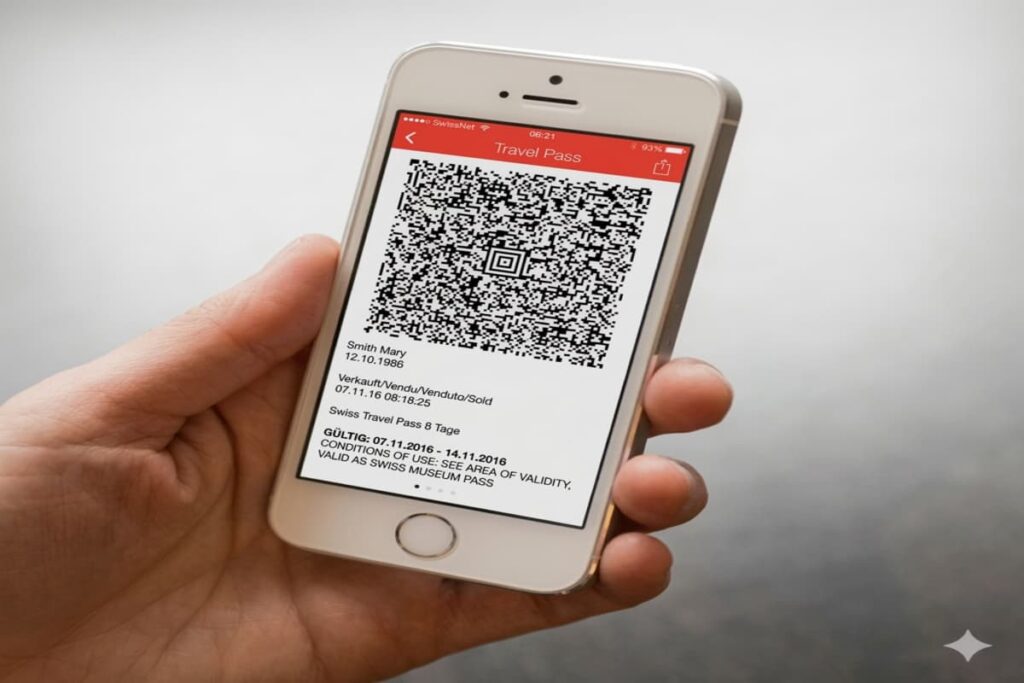
- How it works: For those consecutive days, you just walk onto almost any train, bus, or boat in the country. There are no turnstiles. You sit down, and when the conductor walks by, you show the QR code on your phone. It also gets you free entry into over 500 museums and fully covers a few select mountains like Rigi and Stanserhorn.
- The Vibe: Ultimate freedom. If you see a lake and decide you want to hop on a boat for an hour, you just do it. No math required.
2. The Swiss Travel Pass Flex
This pass offers the same 100% coverage benefits as the continuous pass, but you don’t have to use the days consecutively. You get a set number of travel days (3, 4, 6, 8, or 15) to use anytime within a one-month window.
- How it works: On the morning you want to travel, you go into the app and “activate” one of your days.
- The Vibe: Perfect if you are staying in one city for four days without traveling, then moving across the country, then staying put again. It costs slightly more than the continuous pass.
3. The Swiss Half Fare Card
This is the realist’s secret weapon. It is valid for one entire month and costs a flat 150 CHF upfront.
- How it works: Once you own this card, every single ticket you buy in the country—trains, buses, boats, and even the wildly expensive mountain cable cars—is 50% off. You still have to use the ticket machines or the SBB app every day to buy your discounted tickets.
- The Vibe: Less spontaneous, but mathematically, this is very often the cheapest way to travel if you don’t mind a little daily admin on your phone.
4. Regional Passes (The Niche Option)
If you aren’t crossing the whole country, a national pass might be overkill.
- How it works: Passes like the Berner Oberland Pass or the Jungfrau Travel Pass only cover specific cantons or valleys.
- The Vibe: If you are renting a chalet in Grindelwald for a week and have zero intention of visiting Geneva or Zurich, a regional pass gives you deeper discounts on the specific cable cars in that valley.
How to Choose the Best Swiss Travel Pass for Your Style
The biggest mistake tourists make is assuming the most expensive pass is automatically the best choice. The best Swiss Travel Pass is entirely dependent on the rhythm of your itinerary.
You are “The Hopper”
If your itinerary looks like this: Zurich to Lucerne to Interlaken to Zermatt to Geneva, and you are moving hotels every one or two days, the Continuous Swiss Travel Pass is your best friend. You will easily rack up 100 CHF a day in standard transit fares. The pass will save you money, but more importantly, it will save you the mental fatigue of buying five different tickets every single day.
You are “The Basecamper”
If you are renting an Airbnb in Interlaken for an entire week, and you plan to spend most of your days taking short local buses to trailheads or riding the expensive cable cars up to the high peaks, the continuous pass is a waste of money. The Half Fare Card is the best Swiss Travel Pass alternative here. The continuous pass only gives you 25% off the expensive Jungfraujoch train, while the Half Fare Card gives you a full 50% off.
You are “The Flexible Traveler”
If you want the best Swiss Travel Pass for flexibility—maybe you are staying in Zurich for a conference for three days, then traveling down to Zermatt for a weekend, then staying put again—the Flex Pass is the exact tool you need. You don’t burn your expensive travel days when you are just walking around the city.
The Math: When Does It Actually Pay Off?
Let’s do a real-world cost breakdown. Because readers trust specific math more than vague inspiration.
Imagine a classic, highly efficient 6-day itinerary: You land in Zurich, travel to Lucerne, take the scenic train to Interlaken, go up to the Jungfraujoch, travel down to Zermatt to see the Matterhorn, and return to Zurich.
Here is what that costs buying full-price, standard point-to-point tickets at the machine vs. using the passes (Estimates in CHF based on 2026 standard SBB fares):
| Route / Activity | Full Price Ticket | With Half Fare Card (150 CHF) | With 6-Day Continuous Pass (399 CHF) |
| Zurich Airport to Lucerne | 30 | 15 | 0 (Covered) |
| Mount Pilatus Excursion | 72 | 36 | 36 (50% off) |
| Lucerne to Interlaken | 34 | 17 | 0 (Covered) |
| Jungfraujoch (Top of Europe) | 220 | 110 | 165 (25% off) |
| Interlaken to Zermatt | 84 | 42 | 0 (Covered) |
| Gornergrat Railway (Zermatt) | 110 | 55 | 55 (50% off) |
| Zermatt to Zurich | 120 | 60 | 0 (Covered) |
| Transit Totals | 670 CHF | 335 CHF | 256 CHF |
| Add Pass Upfront Cost | 0 | + 150 CHF | + 399 CHF |
| Final Out-of-Pocket Cost | 670 CHF | 485 CHF | 655 CHF |
The Reality Check:
Look closely at that table. If you buy no pass at all, you are bleeding money (670 CHF). If you buy the 6-Day Continuous Pass, your total out-of-pocket is 655 CHF. But if you use the 150 CHF Half Fare Card, your total out-of-pocket drops to 485 CHF.
In this specific, highly active itinerary, the Half Fare Card wins the math battle.
However, with the Half Fare card, you had to use the SBB app to buy a ticket 7 different times. With the Continuous Pass, you just walked onto the intercity trains and only had to buy discounted tickets for the three mountain peaks. To determine the best Swiss Travel Pass, you have to decide if saving ~170 CHF is worth the minor daily administrative hassle. For budget travelers, it absolutely is. For travelers prioritizing ease, the continuous pass is worth the premium.
Mountain Excursions: The Hidden Costs
This is where people get incredibly frustrated. You drop 400 CHF on a travel pass, walk up to the cable car station in Zermatt, and the attendant asks you for 55 CHF.
A nationwide travel pass does not mean everything is free. The high alpine infrastructure is incredibly expensive to maintain, and the private companies that run it charge a premium.
Here is how the continuous Swiss Travel Pass treats the most popular mountains:
- Mount Rigi: 100% Free. (This makes it the absolute best budget mountain trip from Lucerne).
- Mount Stanserhorn: 100% Free.
- Mount Pilatus: 50% Discount.
- Gornergrat (Matterhorn View): 50% Discount.
- Mount Titlis: 50% Discount.
- Jungfraujoch (Top of Europe): 25% Discount (This is the most expensive railway in the country, and the pass only covers a quarter of the fare past Wengen/Grindelwald).
If your trip is heavily focused on summiting five different peaks via cable car, the Half Fare Card (which gives a flat 50% off almost all of them) is usually the best Swiss Travel Pass strategy.
The Family Travel Reality (The Swiss Family Card)
Traveling with kids in Europe is usually an expensive logistical nightmare. Here, it is brilliantly simple.
If you are traveling with children, finding the best Swiss Travel Pass option for families is the easiest decision you will make on this trip. When you buy any adult Swiss Travel Pass or a Half Fare Card, you check a box to request a Swiss Family Card.
It is 100% free.
What does it do? It allows any child from their 6th birthday to their 16th birthday to travel for free when accompanied by a parent. They don’t get a 50% discount; they ride for zero francs. If you are taking two 12-year-olds up to the Jungfraujoch, the Swiss Family Card literally saves you hundreds of dollars in a single afternoon.
(Note: Children under 6 years old always travel free in Switzerland, everywhere, regardless of what pass the parents hold).
The Digital Nomad and Slow Traveler View
If you are nomading through Europe and plan to stay in Switzerland for a month or more, the standard tourist passes will expire too quickly.
If you want the best Swiss Travel Pass for a long-term stay, buy the Half Fare Card. For 150 CHF, it covers you for a full 30 days. Nomads tend to work from cafes during the week and only travel heavily on the weekends. Paying for a 15-day continuous pass when you are sitting at a laptop from Monday to Thursday is a massive waste of capital. Buy the Half Fare card, and just buy half-price point-to-point tickets on your weekend trips to the Alps.
Also, a quick nomad reality check: SBB trains do not have free onboard WiFi. The 5G network is incredibly fast, even in tunnels, but you will need your own eSIM (like Holafly or Airalo) to tether your laptop while riding the rails.
Mistakes Tourists Make with Passes
I watch people make these same errors every time I am at Zurich Hauptbahnhof. Avoid these to travel like a local:
1. Buying 1st Class Passes
You will notice the passes come in 1st Class and 2nd Class options. The 1st Class passes are astronomically more expensive. Do not buy them. Second class on a Swiss train is cleaner, quieter, and has more legroom than first class in almost any other country. If you want to ride in a 1st class panoramic car on a specific scenic train (like the Bernina Express), you can just buy a temporary “class upgrade” ticket in the SBB app for that single ride.
2. Forgetting to Activate Flex Days
If you buy the Swiss Travel Pass Flex, the conductor will scan a QR code. But if you haven’t actively gone to the website (activateyourpass.com) that morning to assign that specific calendar date as a travel day, the QR code will read as invalid. You will be fined. Always activate your day before boarding the train.
3. Buying Point-to-Point Tickets at the Machine
If you do not have a pass, never walk up to a physical ticket machine on the day of travel to buy a full-price ticket. If you know your schedule a month in advance, use the SBB Mobile App to buy “Supersaver” tickets. These are advance-purchase tickets that lock you into a specific train time, but they can be up to 50% off the standard fare.
Step-by-Step: How to Buy and Use It
Securing the best Swiss Travel Pass means getting it loaded onto your phone before you even land at the airport. You do not want to be standing in a massive queue at the SBB travel center with jet lag.
Where to Buy:
You can buy the passes directly from the official SBB tourist webshop.
If you want something central and convenient, buying through an authorized partner like Switzerland Travel Centre or HappyRail is a solid option. It’s the same price, but platforms like HappyRail allow you to pay in your home currency (like USD or GBP), which saves you from getting hit with foreign transaction conversion fees by your credit card company.
Tip: We only recommend booking platforms we personally use to ensure your digital tickets arrive instantly and securely.
How to Use It:
When the conductor approaches, open the QR code on your phone. They scan it, say “Danke”, and you go back to looking at the mountains. It is that simple.
Buy the pass online a week before your trip.
You will receive a PDF document with a square QR code via email.
Save that PDF to your phone’s files, or add it to your Apple Wallet / Google Wallet.
When you land in Zurich or Geneva, simply walk onto the train platform and board any train.
FAQs
Which is the best Swiss Travel Pass for a 5-day trip?
Because there is no 5-day pass, you have to choose between a 4-day pass or a 6-day pass. Realistically, if your first or fifth day only involves a short 10-minute train ride from Zurich city to the airport, buy the 4-day pass and just pay out of pocket for the cheap airport transfer. Don’t overbuy.
Do I need to reserve seats on the trains?
For 95% of domestic trains, no. You just walk on and sit in any empty seat. You only need to pay extra for mandatory seat reservations on the branded, highly marketed panoramic trains like the Glacier Express or the Bernina Express.
What if I only want to visit the Jungfrau Region?
If you are flying in, going straight to Interlaken or Grindelwald, and not leaving that specific valley for a week, do not buy the national continuous pass. Buy the Half Fare Card, and pair it with a regional Jungfrau Travel Pass or Berner Oberland Pass. It will offer much better coverage for the local cable cars.
Do young adults get a discount?
Yes. If you are between your 16th and 25th birthdays, you qualify for the Swiss Travel Pass Youth. It gives you the same 100% network coverage as the adult pass, but at a massive 30% discount. The 2026 price for a 6-day youth pass is only 282 CHF.
Can I buy the pass at the train station when I arrive?
Yes, you can buy it at the staffed ticket counters at the Geneva or Zurich airports. However, the prices are the same as buying online, and buying in person means standing in line with your luggage. Buy it on your phone before you fly.
Final Thoughts
Travel isn’t about ticking places off a list or rushing from one photo op to the next. It’s about how a place makes you feel — and whether you’d return.
For me, Switzerland surprised me in ways I didn’t expect. Beyond the staggering, aggressive beauty of the Eiger or the Matterhorn, what I remember most is how peaceful travel can actually be when the infrastructure supports you instead of fighting you. Securing the best Swiss Travel Pass means removing the friction of ticket machines, language barriers, and daily transit budgeting. You just get on the train, sit by the massive glass windows, and watch the emerald lakes slide past.
Planning your trip? Save this guide — and check our budget travel section and itinerary blueprints before booking anything. The Alps are waiting, and if you play it smart, they don’t have to cost a fortune.